Archive for August, 2010

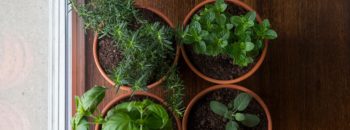
Live in an apartment? Container gardening is easy and rewarding.

Friday, August 20th, 2010

Cathie Lavis is a professor of horticulture at Kansas State University. Her expertise includes landscaping, arboriculture, irrigation, and landscape contracting. She provides insight for homeowners and gardeners on plant care, selection, and more.

You do not have to walk the historic narrow streets of Orvieto, Italy to realize flowers and plants create romance, ambiance and natural atmosphere.

Just one striking plant in a single pot can brighten a corner of your balcony or reward you with fresh tomatoes or herbs. While thoughtfully stylized containers of plants or cascading mixtures of flowers and foliage can have a real impact too.

Selecting the right container is important. Consider the size, location, style and, of course, what you want to grow when making your choice. Both the container and plant must suit the site, so aim to bring together a style that blends with your home, outdoor furniture and the surfaces around the plant (whether they are concrete, gravel, decking or brick).

Terracotta weathers nicely and harmonizes well in almost any setting. Terracotta keeps plant roots a little cooler than plastic containers; however plastic is lighter and easier to move. Plastic withstands harsh winter weather while terracotta can crack when temperatures get too cold. On the opposite end, inexpensive plastic pots may break down under UV light; however they can hold moisture better than terracotta. When it comes to wooden containers, make sure you treat it with a waterproof preservative before planting. Glazed ceramic makes ideal containers, but be sure they have drain holes. Regardless of the material, drain holes are critical. In order to avoid soil loss through the holes, line the bottom of any pot with a sheet or two of newspaper.

When planting, use a soilless potting media purchased from a reputable plant nursery. Watering will depend upon the size of the container, type of plant, location of the container (full sun versus shade) and the time of year. You can use your index finger to feel for moisture in the soil so you know when it’s getting thirsty. A rule of thumb is if the top 1” is dry, it is time to water. Water thoroughly, that is, so water runs out the bottom of the pot. This will allow salt to move out of the soil profile.

There is an enormous range of plants that can be grown in containers, from annual bedding plants and foliage to small vegetables and trees. Containers allow you to grow and enjoy a variety of plants in just about any location.

Choosing the Right Plant

Thursday, August 19th, 2010

Cathie Lavis is a professor of horticulture at Kansas State University. Her expertise includes landscaping, arboriculture, irrigation, and landscape contracting. She provides insight for homeowners and gardeners on plant care, selection, and more.

I think one of the prime challenges for the beginning gardener is selecting the right plant for the right location. Unfortunately, many people assume if the plants are being sold in their area they will do fine. In fact, the one plant I see sold every season here in Kansas is azaleas. They are beautiful in bloom, but they require specific growing conditions, few of which are found around here. For example, azaleas must have an acid soil. Most of them thrive best at a soil pH between 5.0 and 5.5 and the typical soil pH in Eastern Kansas is 7.5-8.5, far too alkaline to support azaleas. Keep in mind your lawn’s growing conditions when you’re looking to purchase plants.

Good gardeners have learned to become good matchmakers. That is, they consider rainfall, winter and summer temperatures, light exposures and the soil conditions before making a decision. Winter temperatures are a critical consideration for perennials, trees, shrubs and even bulbs. By referring to the USDA Plant Hardiness Zone Map http://www.growit.com/zones/, you can learn what USDA hardiness zone you are in and then seek out the plants that can grow best within your area. For example, a garden peony is a Zone 4 plant and will survive winter temperatures as low as 30-40 degrees. On the other side of the spectrum, I cannot leave my gardenia outside all winter because it’s a subtropical plant from Africa and cannot survive the cold temperatures. Just knowing where a plant originated tells you what conditions it can survive.

Another critical factor to consider is how well a plant will perform during the summer months. This applies to all plants, even annuals and bulbs. The American Horticultural Society (AHS) Heat Zone Map and plant rating that takes the guesswork out of selecting heat and drought tolerant plants. The AHS Heat Zone Map parallels the USDA Hardiness Zone Map in that it has 12 different zones. Each zone represents a range of summer heat (http://www.ahs.org/publications/heat_zone_map.htm).

Aided with both the USDA Plant Hardiness Zone Map and the AHS Heat Zone Map you are better equipped to select plants that will perform best in your climate.

Tips to keep your lawn and garden from drying out during the summer

Wednesday, August 18th, 2010

Cathie Lavis is a professor of horticulture at Kansas State University. Her expertise includes landscaping, arboriculture, irrigation, and landscape contracting. She provides insight for homeowners and gardeners on plant care, selection, and more.

Watering seems straightforward and easy; however, many plants die as a result of either over or under watering. Watering properly is really both an art and a science. You need to understand the plant, the soil, your local weather conditions and the method used to apply the water.

Larger plants typically use more water because their root systems are better established. These root systems typically require deep watering every 5 to 7 days depending on weather conditions. Seedlings, who don’t have a good root system established yet, require more frequent watering, applied slowly with a soft spray to prevent damage or washing of seeds.

Different plants have different water requirements, so always keep that in mind as you group plants in your landscape or garden. For example, do not place drought tolerant plants close to those that require more frequent watering. As a general rule for most plants, water to a depth of 6 inches, then let the soil surface dry out to 2-3 inches.

Hot, dry and windy conditions cause plants to use more water and these conditions will influence how fast the soil dries out. Remember, mulching to a depth of 3- to 4-inches really helps conserve water loss through soil evaporation.

Many people have heard you should water your lawn 1 to 2 inches weekly. If you want to follow this rule, you need to determine how long to run an in ground watering system or hose sprinkler to achieve this depth. Set out some type of measuring device like empty tuna cans or uniform plastic containers, spaced evenly in the watering area. Turn on the sprinklers and when the desired amount of water is reached you will know how long to run them in the future. Alternatively, you can hire a certified irrigation auditor to perform an audit on your system to determine proper runtimes.

Ticks Bite Close to Home

Monday, August 9th, 2010

Unlike mosquitoes, who are large enough and loud enough to be noticed, ticks are significantly less obvious but often just as dangerous. People who are familiar with tick problems are used to checking for the pests after hiking or camping, but a recent Wall Street Journal article revealed that the majority of tick bites happen closer to home – literally in your own back yard.

In an August 2 Wall Street Journal article, ticks were profiled as the source of infections such as Lyme disease and Rocky Mountain spotted fever and were cited as the second leading carriers of disease, following only mosquitoes. Tick-borne illnesses often exhibit symptoms that look like something else, making them hard to diagnose. In the article, Dr. David Davenport, an infectious disease specialist at Michigan State’s Center for Medical Studies said, “Without rapid or reliable tests for some diseases, it can be hard for doctors to suspect and diagnose.” According to the Centers for Disease Control (CDC), reported cases of Lyme have risen sharply in recent years with more than 35,000 cases in 2008 compared to just 13,000 in 2000. In 2008, there were more than 2,500 reported cases of Rocky Mountain spotted fever, which can become fatal if not treated, compared to only 579 cases in 1999.

What can be done? Dr. Kirby Stafford from the Connecticut Agricultural Experiment Station says the answer is as simple as landscaping. Coining the phrase, “integrated tick management,” Dr. Stafford has found certain lawn care techniques to be effective when battling the roughly 82 percent of ticks that reside within three yards of a lawn’s perimeter.

Follow these landscaping tips to make sure you’re not inviting ticks into your life:

  • Make a barrier of cedar wood chips—a natural tick repellent—between wooded areas or stone walls and lawns heavily used by the family
  • Keep pets out of the woods
  • Avoid vegetation that attracts deer
  • Treat yards in affected areas with proper pesticide products
  • Follow the CDC’s “integrated tick management” recommendations, which include preventative landscaping and proper application of insecticides to lawns in affected areas

Lawn Care Tips from Disney World

Wednesday, August 4th, 2010

Disney World wouldn’t be the happiest place on earth if it had pest infested landscapes and overgrown shrubbery. To make your lawn more like theirs, Disney’s landscape experts are sharing their secrets with one and all.

Recently, the Disney Parks blog posted Landscaping Tips from the ESPN Wide World of Sports Complex Sportscape Team to help  homeowners apply a few of the best practices used by the sports complex’s groundskeeping staff. The staff relies on proper fertilization and watering to ensure healthy turf grows and weeds do not.

Check out the post to learn helpful tips from a professional crew that grooms 220 acres of Disney’s complex and start treating your lawn like a Magic Kingdom.